Abaya vs Kimono: The Complete Guide (+ Why Kimono-Abayas Are the Best of Both Worlds)
If you've ever stood in front of your closet wondering whether an abaya or kimono better suits your style, you're not alone. Both pieces offer elegant modest coverage, both work beautifully for Dubai's climate, and both have earned their place in modern wardrobes. But understanding the differences—and knowing when to choose each—can transform how you approach modest fashion.
Here's what makes this conversation interesting: you don't actually have to choose. The rise of kimono-abayas brings together the best qualities of both garments into something entirely new. Before we explore this hybrid innovation, let's understand what makes abayas and kimonos distinct, where they overlap, and how each serves different needs in your wardrobe.
Whether you're building your modest fashion collection or simply curious about these two iconic pieces, you're about to discover everything you need to make informed choices that work for your lifestyle, values, and personal style.
Quick Comparison: Abaya vs Kimono at a Glance
| FeatureAbayaKimonoKimono-Abaya | |||
| Origin | Middle East | Japan | Modern fusion |
| Closure | Closed front (robe) | Open front (layering piece) | Varies by design |
| Styling | Worn as complete outfit | Layered over other garments | Both options |
| Primary Use | Daily modest wear | Versatile layering | Maximum versatility |
| Occasions | All, especially formal/traditional | Casual to formal | All occasions |
| Coverage | Full coverage | Depends on base layer | Full coverage option |
| Climate | Works in GCC heat | Excellent for layering | Optimized for Dubai |
Continue reading for detailed explanations of each difference.
What Is an Abaya? Understanding the Traditional Robe
The abaya is a flowing, full-length robe traditionally worn in the Middle East as an outer garment. Rooted in Islamic modest dress traditions, the abaya has evolved from a simple black overgarment into a sophisticated fashion statement that balances cultural values with contemporary design.
Traditional Definition: At its core, an abaya is a loose-fitting, closed-front robe that provides complete coverage from shoulders to ankles. Traditionally black, modern abayas now come in numerous colors, fabrics, and embellishment styles while maintaining their fundamental modest purpose.
Modern Evolution: Today's abayas range from minimalist designs to elaborately embellished pieces featuring embroidery, beading, lace, and architectural cuts. Dubai's fashion scene has particularly embraced the abaya as a canvas for creative expression, transforming it from purely functional modest wear into luxury fashion.
Cultural Significance: For many women in the GCC, the abaya represents cultural identity, religious values, and personal style simultaneously. It's both everyday wear and formal attire, adapting to countless occasions while maintaining its modest foundation.
Common Abaya Styles:
- Classic Black Abaya: Traditional, versatile, appropriate for all settings
- Embellished Abaya: Features decorative elements for special occasions
- Open Abaya: Front closure allows for layering and styling flexibility
- Kimono-Style Abaya: Incorporates open-front design with full coverage
The abaya's greatest strength lies in its completeness—you can put it on over simple undergarments and be appropriately dressed for nearly any occasion. This convenience explains why it remains a wardrobe staple throughout the Middle East.
What Is a Kimono? The Japanese-Inspired Layering Piece
The kimono, originally a traditional Japanese garment, has been adapted by Western fashion into a versatile open-front layering piece. Unlike the abaya, which functions as a complete outfit, fashion kimonos serve as the defining outer layer worn over coordinated base garments.
Fashion Kimono Definition: In contemporary fashion, a kimono refers to an open-front robe or jacket with wide sleeves and a flowing silhouette, inspired by (but not identical to) traditional Japanese dress. These pieces are designed specifically for layering and styling versatility.
Design Characteristics: Fashion kimonos typically feature an open front with no closures, wide sleeves that create dramatic movement, and lengths ranging from hip-length to floor-length. The emphasis is on drape, flow, and the elegant lines created when the fabric moves.
Western Fashion Adoption: What we call "kimonos" in Western and Middle Eastern modest fashion are reinterpretations of the traditional Japanese garment, adapted for modern styling. They maintain the flowing aesthetic and elegant silhouette while serving entirely different wardrobe functions.
Kimono Varieties:
- Short Kimonos: Hip to thigh length, casual styling
- Long Kimonos: Ankle-length, more formal and dramatic
- Silk Kimonos: Luxurious drape, temperature-regulating
- Structured Kimonos: Heavier fabrics, more jacket-like
The kimono's greatest advantage is its versatility—one piece creates countless outfit possibilities depending on how you layer and style it. This makes it particularly valuable for travelers and minimalist wardrobes.
The Key Differences Between Abayas and Kimonos
1. Closure and Construction
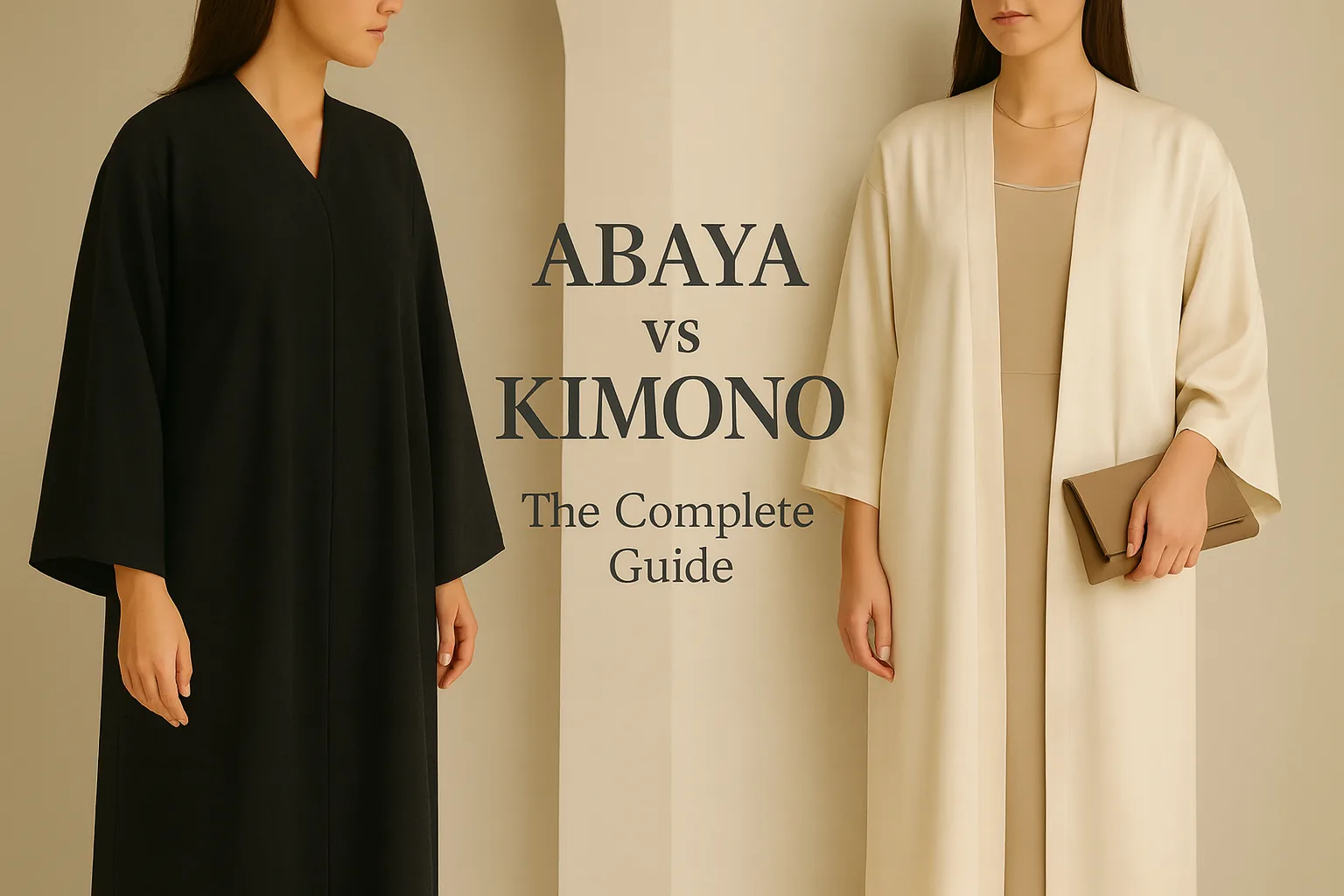
Abaya: The abaya is designed as a closed-front robe. Most traditional styles button, zip, or overlap at the front, creating a complete garment that functions independently. You wear an abaya over other clothing, but the abaya itself provides all necessary coverage.
Kimono: Fashion kimonos are open-front by design. They have no closures (or optional ties/belts) and are meant to be worn unbuttoned, revealing the outfit underneath. The kimono enhances and frames what you're already wearing rather than covering it completely.
Practical Impact: This fundamental difference affects everything else. An abaya can be your entire outfit—throw it over basic undergarments and you're dressed. A kimono requires a thought-out base outfit because it won't hide what's underneath.
2. Styling Philosophy
Abaya: The abaya follows a "one-piece solution" philosophy. It's designed to be the outfit, not part of an outfit. This makes getting dressed simpler—choose your abaya, add a hijab if desired, and you're ready.
Kimono: The kimono follows a "layering artistry" philosophy. It's specifically designed to be styled with other pieces—jeans and a tee, a midi dress, tailored trousers and a blouse. The kimono is never the whole story; it's the finishing touch that pulls everything together.
Which Approach Fits Your Life: If you value simplicity and speed in getting dressed, the abaya's all-in-one approach serves you well. If you enjoy creative styling and want maximum outfit variety from minimal pieces, the kimono's versatility wins.
3. Cultural Context and Occasions
Abaya: Deeply rooted in Middle Eastern and Islamic culture, the abaya carries specific cultural and often religious significance. It's universally understood as modest wear throughout the GCC and is appropriate (sometimes expected) in conservative settings, religious contexts, and formal occasions.
Kimono: The fashion kimono exists outside specific cultural requirements. It's a styling choice rather than a cultural or religious garment. This makes it feel more casual and fashion-forward to many wearers, though it can certainly be dressed up for formal events.
Navigating Cultural Expectations: In very conservative settings or traditional family gatherings, an abaya may be more appropriate. For professional environments, creative industries, or personal time, a kimono offers styling freedom without compromising modesty.
4. Coverage and Modesty Approach
Abaya: Provides guaranteed full coverage regardless of what's underneath. The closed-front design, full-length cut, and typically generous sizing ensure comprehensive modest coverage in all situations.
Kimono: Coverage depends entirely on your base outfit. A kimono over a modest dress or high-necked blouse with long pants can be completely modest. But the same kimono over a tank top and shorts wouldn't meet modest standards. The kimono enhances modesty; it doesn't create it independently.
For Conservative Settings: If you need absolute certainty of appropriate coverage, the abaya's self-contained modesty is simpler. If you're in environments with more flexibility, a well-styled kimono offers modesty with more personal expression.
5. Fabric and Movement
Abaya: Traditional abayas often use heavier, more structured fabrics (especially for formal wear) that create elegant, flowing movement while maintaining shape. The closed construction means the fabric needs to be substantial enough to hang properly without revealing body shape.
Kimono: Kimonos often use lighter, more fluid fabrics—particularly silk—that create dramatic movement and beautiful drape. Because the kimono is open and layered over other clothing, the fabric can be sheerer and more delicate without compromising modesty.
Climate Considerations: In Dubai's heat, lightweight silk kimonos can actually feel cooler than traditional abayas because the open front allows air circulation. However, modern abayas in breathable fabrics close this gap significantly.
The Similarities: What Abayas and Kimonos Share
Despite their differences, abayas and kimonos have significant common ground that explains why both thrive in Dubai's modest fashion scene.
Both Offer Elegant Modest Coverage
Whether closed-front or layered, both garments provide the flowing, full-coverage silhouette that defines modest fashion. Both can be styled to meet various modesty standards while maintaining sophistication and style.
Both Elevate Simple Base Outfits
An abaya transforms basic undergarments into a complete outfit. A kimono elevates simple jeans-and-tee combinations into polished looks. Both pieces do the heavy aesthetic lifting, allowing you to keep the rest of your outfit minimal.
Both Work in Dubai's Climate
Modern abayas and handcrafted kimonos both use breathable fabrics that work with (not against) the GCC's heat. Quality pieces in both categories feature natural fibers and thoughtful construction that keep you comfortable indoors and out.
Both Transition Across Occasions
You can wear both pieces from morning errands to evening events simply by changing your accessories. An embellished abaya or silk kimono moves seamlessly from daytime to formal occasions.
Both Reflect Personal Style
Gone are the days of one-style-fits-all modest wear. Both abayas and kimonos now come in countless designs, from minimalist to maximalist, allowing you to express your personality while maintaining modesty.
How to Choose Between an Abaya and a Kimono
The right choice depends on your lifestyle, styling preferences, and specific needs. Here's how to decide:
Choose an Abaya When:
You Value Simplicity: If getting dressed quickly matters to you, the abaya's one-piece solution can't be beat. It's the fastest path from closet to door.
Cultural or Religious Context Matters: For religious observance, family expectations, or cultural traditions, the abaya's established role in modest Islamic dress makes it the clearer choice.
You Need Guaranteed Coverage: In situations where you need absolute certainty of appropriate modest coverage—conservative professional settings, religious events, or unfamiliar cultural contexts—the abaya's self-contained modesty removes all guesswork.
You Prefer Classic Elegance: There's a timeless sophistication to a beautifully cut abaya that appeals to women who gravitate toward classic, refined aesthetics over trendy styling.
Choose a Kimono When:
You Love Creative Styling: If putting outfits together energizes you, a kimono's versatility creates endless possibilities. One kimono becomes ten different looks depending on how you style it.
You Want Maximum Versatility: For travel, minimalist wardrobes, or simply getting more value from fewer pieces, a kimono delivers extraordinary outfit variety from a single garment.
Your Environment Allows Flexibility: In professional settings, creative industries, or personal time where cultural expectations are less rigid, a kimono offers more styling freedom.
You Appreciate Artisan Craftsmanship: Quality kimonos showcase fabric drape, hand-stitching, and textile quality in ways that visible, closed garments sometimes don't. If you appreciate these details, kimonos highlight them beautifully.
Consider Both When:
Your Lifestyle Varies: If you move between different contexts—conservative family gatherings, modern work environments, casual weekends—having both options lets you choose appropriately for each situation.
You Value Options: Different occasions, moods, and practical needs all benefit from having both styling approaches available. Neither has to be an either-or choice.
The Rise of Kimono-Abayas: Best of Both Worlds
Here's where fashion innovation creates something entirely new: the kimono-abaya hybrid that combines the best qualities of both garments.
What Is a Kimono-Abaya?
A kimono-abaya merges the flowing, open-front aesthetic of a kimono with the full-coverage design of an abaya. These pieces typically feature:
- Open-front kimono styling with optional closures
- Full-length coverage like traditional abayas
- Wide, dramatic sleeves characteristic of kimonos
- Luxury fabrics (often silk) associated with premium kimonos
- Modest coverage that works with or without base layers
The Innovation: Kimono-abayas give you choice. Wear them open for kimono-style layering, or closed for abaya-level coverage. Style them casually over jeans or formally over a dress. The versatility is extraordinary.
Why Kimono-Abayas Are Perfect for Dubai
Climate Optimization: Kimono-abayas often use breathable silk or lightweight fabrics that work beautifully in heat, while the option to close the front provides coverage for conservative settings. It's climate-smart modest fashion.
Cultural Flexibility: In Dubai's diverse, international environment, kimono-abayas bridge different cultural contexts. They're modest enough for traditional settings, fashion-forward enough for modern Dubai, and versatile enough for everything in between.
Styling Versatility: Open, they function as statement kimonos over your favorite outfits. Closed, they provide complete coverage as elegant abayas. One piece, infinite styling options.
Modern Modest Fashion: Kimono-abayas represent the evolution of modest fashion—honoring traditional values while embracing contemporary design, craftsmanship, and versatility.
How to Style a Kimono-Abaya
As a Kimono (Open Front): Layer over tailored trousers and a silk blouse for professional settings. The dramatic sleeves and flowing silhouette create sophisticated upperwear that commands attention without sacrificing modesty.
As an Abaya (Closed Front): Wear over simple undergarments for a complete, elegant outfit. Add a belt at the waist to create structure, or leave it flowing for traditional abaya elegance.
Hybrid Styling: Partially close the front for an asymmetric look that's fashion-forward and unexpected. Belt it loosely at the hip for a third styling option.
Occasion Flexibility:
- Morning meetings: Closed, belted, with structured accessories
- Afternoon events: Open over a midi dress
- Evening celebrations: Embellished kimono-abaya, styled open to showcase the dress underneath
SHAZ's Approach to Kimono-Abayas
At SHAZ, we position kimono-abayas as modern upperwear—the defining layer that transforms your entire look. Our handcrafted collection focuses on:
Quality Fabrics: Korean silk that drapes beautifully, regulates temperature, and feels luxurious against skin. Each piece is selected for how it moves, not just how it looks.
Artisan Craftsmanship: Hand-stitched seams, precision cuts, and attention to detail that you can feel the moment you slip one on. This is the difference between mass-produced and thoughtfully created.
Versatile Design: Pieces that work as kimonos, abayas, or both—giving you maximum styling options from minimal wardrobe pieces.
Dubai-Optimized: Created specifically for the GCC climate and cultural context. These aren't Western fashion adapted for Dubai; they're designed from the ground up for how you actually live here.
💡 Explore SHAZ's kimono-abaya collection to see how these hybrid pieces work in practice. Each is designed to give you the coverage of an abaya with the styling versatility of a kimono.
Building Your Modest Wardrobe: Abayas, Kimonos, or Both?
The question isn't really "which one" but rather "which combination serves your life best." Here's a strategic approach:
Start With Your Core Need
If you need one versatile piece: A kimono-abaya gives you the most options. You can wear it as either garment depending on the situation.
If simplicity is paramount: Start with classic abayas. They're the fastest path to getting dressed with confidence.
If you love styling: Begin with kimonos. You'll get maximum outfit variety from minimal pieces.
Build Based on Lifestyle
Conservative professional environment:
- 2-3 elegant abayas (black, navy, neutral)
- 1 kimono-abaya for flexibility
- 1-2 kimonos for weekend styling
Creative professional environment:
- 2-3 versatile kimonos
- 1 classic abaya for formal occasions
- 1 kimono-abaya for maximum flexibility
Stay-at-home or variable schedule:
- 2-3 comfortable abayas for ease
- 1-2 kimonos for when you want to feel put-together
- 1 special kimono-abaya for events
Quality Over Quantity
Whether choosing abayas, kimonos, or kimono-abayas, invest in pieces made with quality fabrics and construction. Three exceptional pieces you wear constantly serve you better than ten mediocre ones gathering dust.
Signs of Quality:
- Natural fiber fabrics (silk, cotton, linen)
- Hand-finished seams and details
- Thoughtful drape and movement
- Pieces that feel substantial without being heavy
Our Solara collection exemplifies this quality-over-quantity philosophy—each piece designed to be worn repeatedly, styled countless ways, and cherished for years.
Frequently Asked Questions
What is the main difference between an abaya and a kimono?
The fundamental difference is closure and function. An abaya is a closed-front robe designed to be worn as a complete modest outfit, providing full coverage independently. A kimono is an open-front layering piece designed to be styled over other garments, enhancing (not creating) modesty. Abayas function as complete outfits; kimonos are styling pieces.
Can I wear a kimono instead of an abaya for modest dress?
Yes, if you style it properly. A kimono layered over modest base clothing (high necklines, long sleeves, full-length bottoms) provides beautiful modest coverage. However, in very conservative settings or contexts where cultural tradition matters, an abaya may be more appropriate. The key is ensuring your complete outfit—kimono plus base layers—meets modesty standards.
What is a kimono-abaya and how is it different from regular abayas?
A kimono-abaya is a hybrid garment that combines kimono styling (open front, wide sleeves, flowing silhouette) with abaya coverage (full length, substantial fabric, modest design). Unlike traditional abayas that must be worn closed, kimono-abayas can be styled open like kimonos or closed like abayas, giving you multiple styling options from one piece. They represent modern innovation in modest fashion.
Which is more versatile: an abaya or a kimono?
Kimonos offer more styling versatility—one piece creates multiple different looks depending on what you layer underneath and how you accessorize. However, abayas offer more occasion versatility—they're appropriate in more contexts and require less thought to style. The answer depends on whether you value outfit variety (kimono wins) or simplicity and broad appropriateness (abaya wins).
Are kimono-abayas appropriate for conservative settings?
Yes, when worn closed. A kimono-abaya worn as a closed garment provides the same full coverage as a traditional abaya and is appropriate for conservative settings. The advantage is that you have the option to style it open in less formal contexts, giving you one piece that adapts to different situations rather than needing separate garments.
How do I choose between an abaya and a kimono for my wardrobe?
Consider your lifestyle and priorities. Choose abayas if you value simplicity, cultural tradition, or guaranteed coverage in all situations. Choose kimonos if you enjoy creative styling, want maximum outfit variety, or work in environments with flexibility. Best option: include both, plus kimono-abayas for maximum versatility. Different occasions and moods benefit from having different options available.
Conclusion
The abaya versus kimono question doesn't have a single right answer because both garments serve distinct purposes in a thoughtful modest wardrobe. The abaya offers the simplicity of complete coverage, cultural connection, and elegant tradition. The kimono provides styling versatility, creative expression, and modern modest fashion.
What makes this moment in modest fashion exciting is that you don't have to choose. Kimono-abayas represent the innovation that happens when fashion honors tradition while embracing new possibilities. These hybrid pieces give you the coverage of an abaya when you need it and the styling flexibility of a kimono when you want it.
The real question isn't "abaya or kimono" but rather "which combination of abayas, kimonos, and kimono-abayas serves my life best?" Different days call for different approaches. Having options means always having exactly what you need.
Ready to explore how these pieces work in your wardrobe? Discover SHAZ's collection of handcrafted kimonos and kimono-abayas designed specifically for Dubai's modern modest fashion. Each piece is created to work as hard and look as beautiful as you do—because modern upperwear should never be an afterthought.